Why Skilled Trades Are the Career Path Least Likely to Be Automated
Share this article with your network.


By Katherine Gustafson
There are relatively few workers in the U.S. economy who feel fully secure as the age of artificial intelligence unfolds.
From copywriters to paralegals to radiologists, a wide range of workers are anticipating the need to pivot now that digital models are learning how to do their jobs faster and cheaper. But this dispiriting news doesn’t apply across the board, particularly in trade careers that AI is less equipped to replace.
Read on to learn how and why trade jobs are likely to thrive over the long term. Tapping into this kind of stability is a smart move in an economy that is shifting under our feet.
Trades are safer from automation
Current technology including AI agents and robots could be capable of automating about 57% of current U.S. work hours, according to McKinsey Global Institute. A Pew Research Center analysis finds that about one-fifth of all U.S. workers are in “high-exposure” jobs, a disproportionate number of which are white-collar careers that require college education.
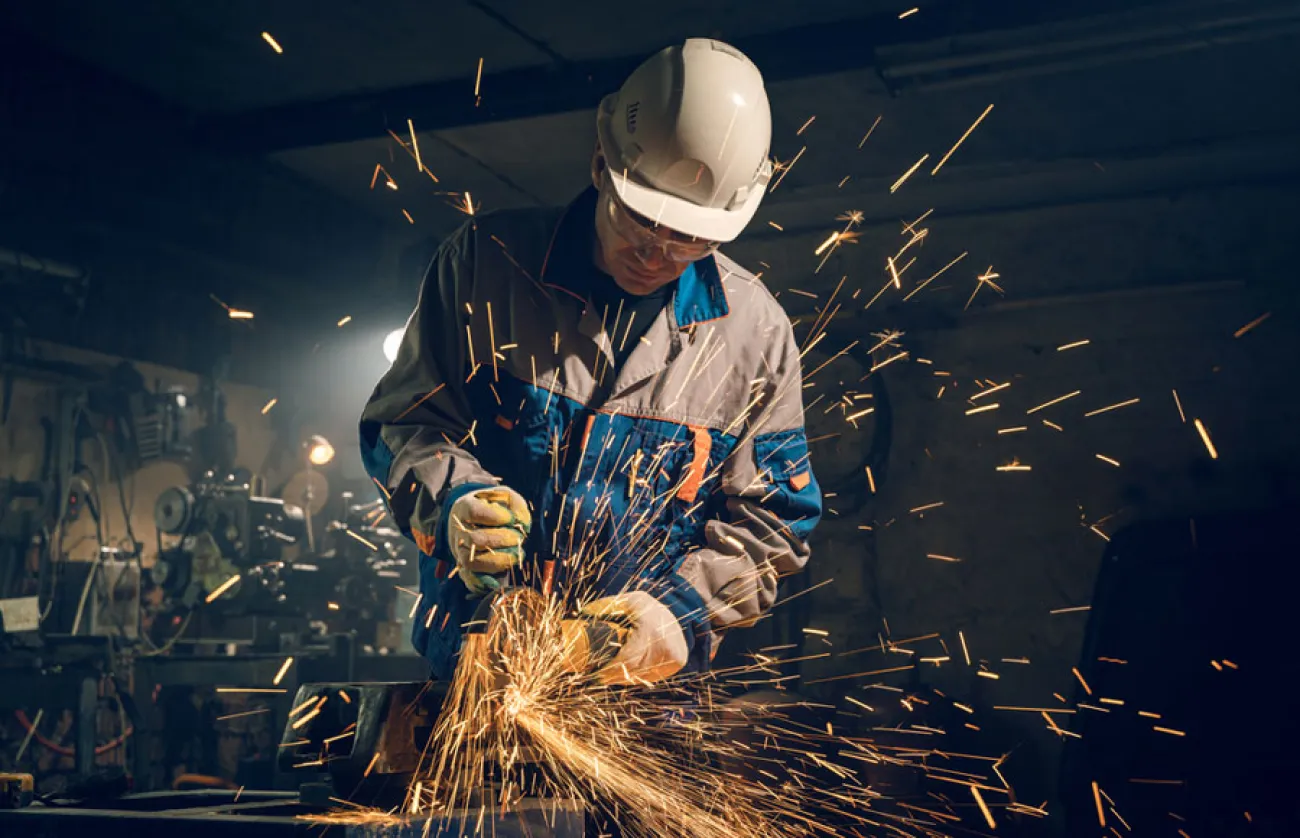
The news grabbing fewer headlines is that a larger share of U.S. workers—almost a quarter—are in jobs particularly unlikely to be automated by AI. That category includes the skilled trades, such as electricians, plumbers, welders, dental hygienists, and many others.
Every job is a little different
Trade jobs are relatively safe from automation because they are characterized by variation. Each one of a dental hygienist’s patients has unique teeth, just as each home an HVAC repairperson visits has equipment from a particular brand and year. The work these professionals do requires touch or manipulation, as well as situational judgment and on-site problem-solving.
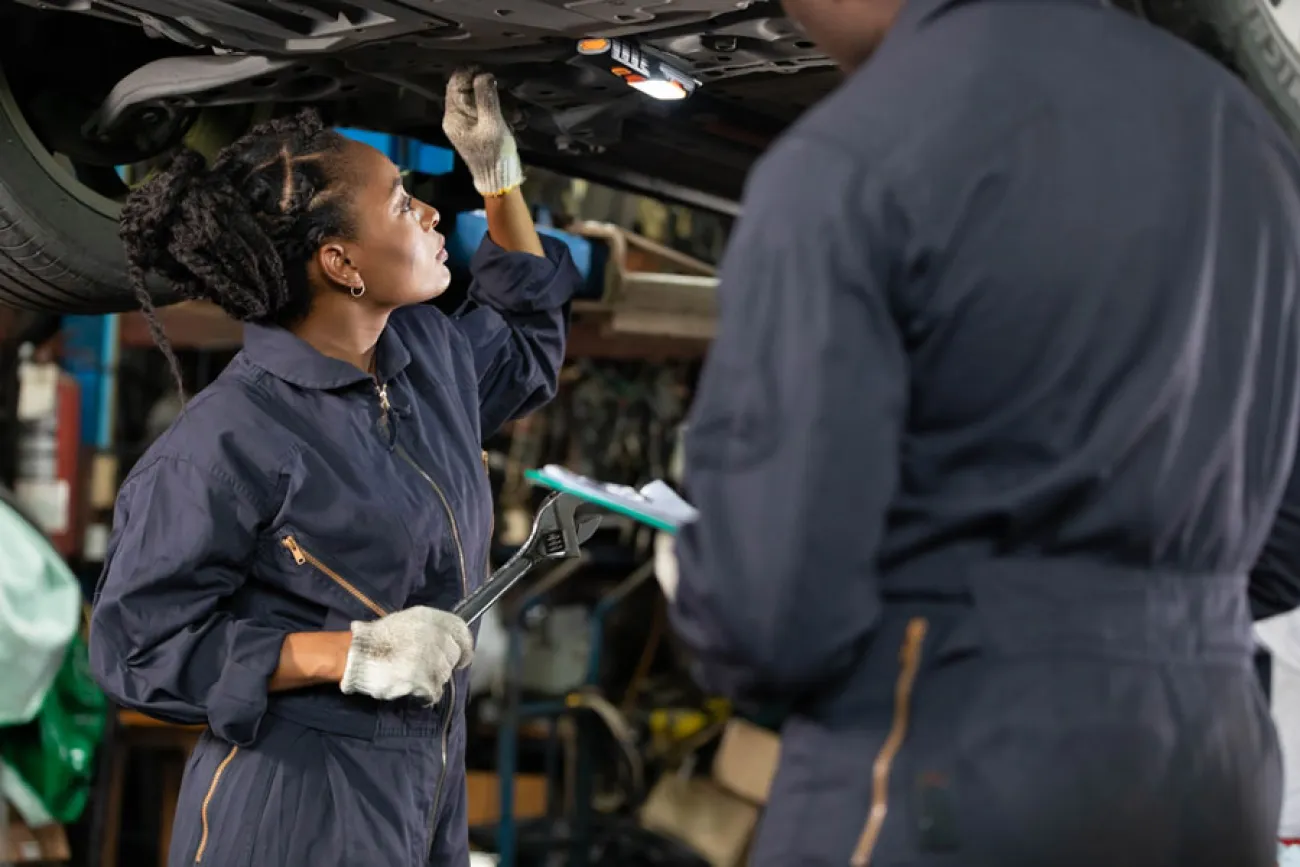
It’s difficult or impossible to automate the work of a tradesperson upgrading the wiring of a hundred-year-old house or inspecting the engine of a customer’s car. That’s why Pew Research Center’s analysis identified the need to apply situation-specific mechanical skills as a key element in jobs with the lowest AI exposure.
Regulated jobs need human accountability
Trades are heavily regulated jobs for good reason. Faulty electrical work can start house fires, gas leaks can be lethal, and poor dental work can cause untold pain.
Licensing boards, insurance requirements, and code inspections all function by associating a specific human’s name with a job and making that person accountable for the results. That regulatory structure cannot easily accommodate the AI revolution, as AI systems cannot be held accountable on their own.
Even as AI tools get better at flagging code violations, the work will still need to be done by a licensed professional, with their sign-off guaranteeing its quality.
Demand is outstripping supply
If AI were decimating trade work as it is some white-collar jobs, employment numbers would reflect a decline in these sectors. But data from the U.S. Bureau of Labor Statistics tell a different story. For example, according to the agency, employment of electricians is projected to grow 9% from 2025 to 2035, increasing by about 72,700 openings a year. HVAC technician jobs are likely to expand even faster: 11% over the same period, with roughly 40,600 annual openings. Both of these professions are growing faster than average for all occupations.
As many as 2.1 million jobs in these fields could go unfilled by 2030, according to Deloitte and The Manufacturing Institute. Retirement is a major driver of that gap, as Baby Boomers leave the trades faster than new workers enter. But that shortage is only growing worse because AI isn’t able to pick up any of the slack. Ironically, the sectors best insulated from AI disruption are also those with the weakest and fastest-aging talent pipelines.
AI is a tool for tradespeople
Just because AI is not primed to replace tradespeople doesn’t mean the trades are untouched by this new technology. Workers can now benefit from the use of AI-assisted tools like diagnostic software, predictive maintenance sensors, robotic-assisted welding, and automated scheduling and inventory systems.
The reality is hardly “AI versus tradespeople.” Instead, it’s AI handling the repetitive, rote elements of jobs while human workers still own problem diagnosis, hands-on execution, and customer relationships.

How to explore trade careers
SkillPointe is a good place to start exploring what trade careers look like day to day, including how AI is affecting them. Visit the site to discover skills-based careers that don't require a four-year degree, from welding and electrical work to dental hygiene and automotive technology.
SkillPointe’s Explore Careers section features 79 career profiles, each covering job duties, salary ranges, and training paths. About two-thirds of the way down each of those pages, the final question in the FAQ section addresses AI’s influence on the given career path: “How does AI impact becoming a [welder / dental assistant / auto body technician / etc.]?” The site takes the guesswork out of figuring out how AI is changing each job and where human skills and accountability are irreplaceable.
While AI is bringing change to many—and maybe most—jobs in the economy, it cannot replace the physical skill, judgment, accountability, and trust-based relationships that tradespeople rely on to thrive in their careers.
Katherine Gustafson is a full-time freelance writer specializing in content for mission-driven changemakers such as tech disruptors in fintech, healthcare IT, and B2B SaaS. She also does corporate work on business topics including accounting, management, and innovation for companies such as Bloomberg, Visa and Adobe.
Feeling overwhelmed with options?
Take the SkillPointe Quiz
It’s OK if you don’t know what you want to do. This short visual quiz will help you identify skills-based careers that best match your personality.